

Exploring the realm of critical illness policies covering cancer, stroke, and more invites readers into a world of valuable insights and essential information. Brace yourself for a journey filled with knowledge and understanding that will undoubtedly enrich your perspective on these crucial insurance policies.
Delve into the specifics of what critical illness policies entail and how they play a vital role in safeguarding individuals against unforeseen health challenges.
What is Critical Illness Insurance?
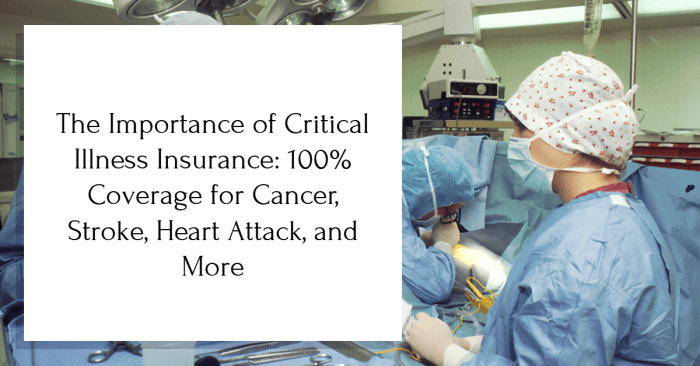
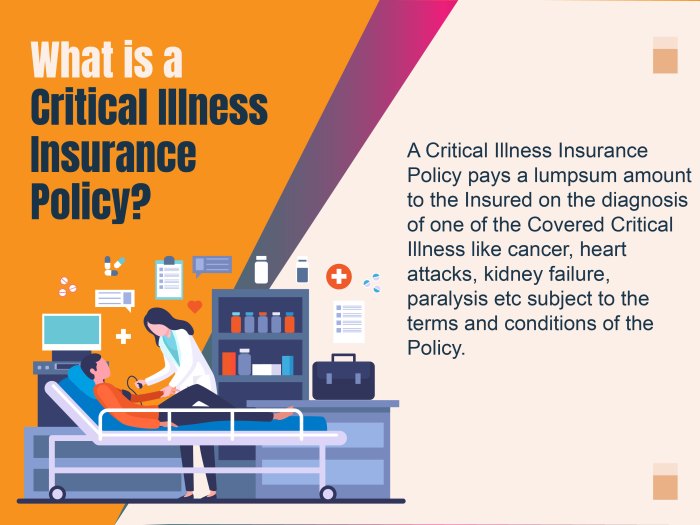
Critical illness insurance is a type of insurance policy that provides a lump-sum payment in the event that the policyholder is diagnosed with a specified critical illness. This payment can be used to cover medical expenses, living expenses, or any other financial obligations that may arise during the illness.
Key Features of Critical Illness Policies
- Coverage for Specific Illnesses: Critical illness policies typically cover a defined list of serious illnesses such as cancer, stroke, heart attack, and organ failure.
- Lump-Sum Payout: If the policyholder is diagnosed with a covered illness, they receive a lump-sum payment from the insurance company.
- No Requirement for Hospitalization: Unlike traditional health insurance, critical illness policies do not require the policyholder to be hospitalized to receive benefits.
- Survivor Benefits: Some critical illness policies also offer survivor benefits, which provide a payout to the policyholder's beneficiaries in the event of their death.
Importance of Having Critical Illness Coverage
- Financial Protection: Critical illness insurance can help cover the high costs associated with treating serious illnesses, ensuring that the policyholder does not face financial hardship.
- Peace of Mind: Knowing that you have critical illness coverage can provide peace of mind, allowing you to focus on your recovery without worrying about financial concerns.
- Supplement to Health Insurance: Critical illness insurance can complement your existing health insurance coverage by providing additional financial support for specific illnesses not covered by traditional health insurance.
Common Critical Illnesses Covered
When it comes to critical illness policies, there are several major conditions that are typically covered. These include cancer, stroke, heart attack, organ transplant, paralysis, and more. Each of these illnesses comes with its own set of coverage details and benefits.
Cancer
- Most critical illness policies cover various types of cancer, including breast cancer, lung cancer, and prostate cancer.
- The coverage for cancer typically includes diagnosis, treatment, and aftercare expenses.
- Some policies may also provide coverage for experimental treatments or alternative therapies.
Stroke
- Stroke is another common critical illness covered by insurance policies.
- Coverage for stroke usually includes hospitalization, rehabilitation, and ongoing care.
- Some policies may also offer financial support for home modifications to accommodate the needs of stroke survivors.
Heart Attack
- Heart attack is often included in critical illness coverage due to its serious and sudden nature.
- Insurance policies for heart attacks typically cover hospitalization, surgery, medication, and cardiac rehabilitation.
- Additional benefits may include coverage for lifestyle changes and counseling services.
Organ Transplant
- Organ transplant coverage is essential for individuals undergoing major surgeries such as kidney, liver, or heart transplants.
- Insurance policies for organ transplants usually cover the cost of the transplant surgery, pre-transplant evaluations, and post-operative care.
- Some policies may also offer coverage for travel and accommodation expenses related to the transplant procedure.
Cancer Coverage
When it comes to critical illness policies, cancer coverage is a crucial aspect that many individuals consider. These policies typically cover a wide range of cancer types, including but not limited to breast cancer, lung cancer, prostate cancer, and colon cancer.
The coverage extends to both early-stage and advanced-stage cancers, providing financial support to policyholders during their treatment journey.
Treatment Costs Covered for Cancer Patients
Critical illness policies often cover various treatment costs for cancer patients, which can be a huge relief for individuals facing this challenging diagnosis. Some of the common expenses covered include chemotherapy, radiation therapy, surgery, medications, hospital stays, doctor visits, and rehabilitation services.
These policies aim to alleviate the financial burden associated with cancer treatment and allow patients to focus on their recovery without worrying about the costs.
- Chemotherapy: Critical illness insurance can help cover the costs of chemotherapy sessions, which are essential in treating many types of cancer.
- Radiation Therapy: Coverage may extend to radiation therapy, another common treatment modality for cancer patients.
- Surgery: Critical illness policies may help offset the expenses related to surgical procedures, such as tumor removal or lymph node dissection.
- Medications: The cost of prescribed medications, including pain relief drugs and anti-nausea medications, can also be included in the coverage.
- Rehabilitation Services: Some policies cover rehabilitation services, such as physical therapy or counseling, to support patients in their recovery process.
How Critical Illness Insurance Can Help Cancer Patients Financially
Critical illness insurance plays a crucial role in providing financial assistance to cancer patients when they need it the most. By receiving a lump sum payment upon the diagnosis of a covered cancer, policyholders can use the funds to cover medical expenses, household bills, transportation costs, and other financial obligations.
This financial support allows individuals to focus on their treatment and recovery without the added stress of worrying about their financial stability.
Having critical illness insurance can provide peace of mind for cancer patients and their families, knowing that they have a financial safety net during a challenging time.
Stroke Coverage
When it comes to critical illness policies, stroke coverage is an essential component that provides financial support to individuals who suffer from this severe medical condition. Stroke can have a devastating impact on both the patient and their family members.
It can lead to long-term disabilities, affecting the individual's ability to work and perform daily activities. The emotional and financial strain can be overwhelming, making it crucial to have a safety net in place.
Support Provided by Critical Illness Insurance
Critical illness insurance can offer a lump sum payment to stroke survivors, helping them cover medical expenses, rehabilitation costs, and other financial obligations. This financial support can ease the burden on the individual and their family during a challenging time.
- Assistance with medical bills and treatment expenses
- Income replacement during recovery period
- Funds for rehabilitation and therapy sessions
- Coverage for home modifications or specialized equipment
Having critical illness insurance can provide peace of mind and ensure that stroke survivors have the necessary resources to focus on their recovery without worrying about financial constraints.
Other Illnesses Covered
When it comes to critical illness policies, it's important to consider the range of health conditions that are covered beyond cancer and stroke. These policies often include coverage for lesser-known critical illnesses that can also have a significant impact on your health and finances.
Additional Critical Illnesses
- Heart Attack: Critical illness policies typically cover heart attacks, which can result in serious health complications and require expensive medical treatment.
- Organ Failure: Coverage may extend to organ failures such as kidney failure, liver failure, or lung disease, which can necessitate organ transplants or ongoing dialysis.
- Multiple Sclerosis: Some policies include coverage for multiple sclerosis, a chronic autoimmune disease that affects the central nervous system.
- Parkinson's Disease: Parkinson's disease, a progressive neurological disorder, is often covered under critical illness policies due to its long-term impact on health and quality of life.
Significance of Comprehensive Coverage
Having a comprehensive critical illness policy that covers a wide range of health conditions is crucial for ensuring financial protection in the face of unexpected medical emergencies. By including coverage for various critical illnesses, policyholders can have peace of mind knowing that they are prepared for a range of health challenges that may arise.
Exclusions and Limitations
When it comes to critical illness policies, it's important to be aware of the exclusions and limitations that may affect your coverage. Understanding these factors can help you make informed decisions about your insurance needs.
Common Exclusions in Critical Illness Policies
- Pre-existing conditions: Most critical illness policies do not cover conditions that were diagnosed before the policy was taken out.
- Self-inflicted injuries: Injuries or illnesses resulting from self-harm are typically not covered.
- Non-disclosure of medical history: If you fail to disclose relevant medical information when applying for the policy, it may lead to a denial of claims.
- Specific illnesses: Some policies may exclude coverage for certain types of illnesses, such as mental health disorders or certain types of cancer.
Limitations on Coverage for Certain Illnesses
- Early-stage cancer: Some policies may only provide coverage for cancer if it has reached a certain stage or severity.
- Partial disability: Coverage for illnesses that result in partial disability may have limitations, depending on the policy terms.
- Non-life-threatening conditions: Certain critical illnesses that are not considered life-threatening may have limited coverage under some policies.
Factors Affecting Coverage of Critical Illness Policies
- Age: Older individuals may face limitations on coverage or higher premiums due to increased health risks.
- Occupation: Some occupations with higher risk factors may affect the coverage options available to individuals.
- Family medical history: Pre-existing genetic conditions in the family may impact the coverage of critical illness policies.
Final Wrap-Up
In conclusion, the discussion surrounding what critical illness policies cover, particularly in terms of cancer, stroke, and other major illnesses, highlights the significance of securing comprehensive coverage. It's imperative to be well-informed and prepared for any health eventuality to ensure financial stability and peace of mind.
FAQ Section
What are some common exclusions in critical illness policies?
Common exclusions may include pre-existing conditions, self-inflicted injuries, and illnesses arising from drug abuse. It's crucial to review policy details to understand specific exclusions that may apply.
How does critical illness insurance differ from traditional health insurance?
Critical illness insurance provides a lump sum payment upon diagnosis of a covered condition, offering financial support beyond medical expenses. In contrast, traditional health insurance covers medical costs incurred during treatment.
Can critical illness policies be customized to cover specific illnesses?
Some insurers offer the flexibility to customize policies to include additional illnesses based on individual needs. It's advisable to consult with an insurance provider to explore customization options.