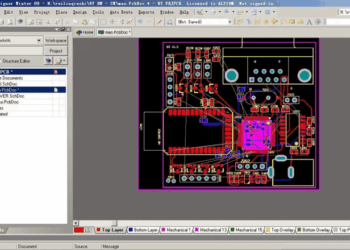

Exploring the crucial role of Altium Auto Route in modern automotive technology, this article delves into how this innovative tool is transforming PCB design processes in the automotive industry.
Detailing its impact, significance, and real-world applications, this discussion aims to provide a comprehensive understanding of the subject matter.
The Role of Altium Auto Route in Modern Automotive Tech
Altium Auto Route is a feature in Altium Designer software that automates the process of routing connections on a printed circuit board (PCB). In the automotive industry, Altium Auto Route plays a crucial role in streamlining the design process, optimizing signal integrity, and reducing production costs.
Utilization of Altium Auto Route in Modern Automotive Design
- Altium Auto Route is utilized in the design of automotive ECUs (Engine Control Units) to ensure efficient routing of complex connections within a limited space.
- Automotive sensor modules often rely on Altium Auto Route to achieve precise signal paths and minimize electromagnetic interference.
- In electric vehicles, Altium Auto Route is used to optimize power distribution and ensure reliable communication between various components.
Advantages and Limitations of Altium Auto Route in Automotive PCB Design
- Advantages:
- Time-saving: Altium Auto Route automates the routing process, saving valuable time during the design phase.
- Signal Integrity: By optimizing trace paths, Altium Auto Route helps maintain signal integrity and reduce the risk of electrical noise.
- Cost-effective: The efficient routing provided by Altium Auto Route can lead to cost savings in production and maintenance.
- Limitations:
- Complexity: Altium Auto Route may struggle with highly complex PCB layouts or specific design requirements that require manual intervention.
- Customization: Some design specifications may not align with the automated routing decisions made by Altium Auto Route, necessitating manual adjustments.
- Learning Curve: Mastery of Altium Auto Route features may require training and experience to leverage its full potential effectively.
Automation in Automotive PCB Design
Automation tools like Altium Auto Route play a crucial role in speeding up the design process of automotive PCBs, leading to improved efficiency and accuracy in modern automotive technology.
Impact of Automation Tools
- Automation tools like Altium Auto Route can significantly reduce the time required for PCB routing by automatically creating optimized routes based on design constraints and requirements.
- These tools help eliminate human errors and inconsistencies that may occur during manual routing, leading to higher accuracy in the final design.
- By automating repetitive tasks, engineers can focus more on design optimization and innovation, ultimately improving the overall quality of automotive PCBs.
Manual Routing vs. Automated Routing
- Manual routing in automotive PCB design involves engineers manually determining the best routing paths for traces, which can be time-consuming and prone to errors.
- Automated routing, on the other hand, utilizes algorithms to find the most efficient routing paths while adhering to design rules and constraints, resulting in faster and more accurate designs.
- Compared to manual routing, automated routing with tools like Altium Auto Route can handle complex designs with multiple layers and high component densities more effectively.
Improving Efficiency and Accuracy
- Automation tools improve overall efficiency in automotive PCB design by streamlining the routing process, reducing design iterations, and accelerating time-to-market for new automotive technologies.
- By leveraging automation, engineers can achieve higher design accuracy, ensure signal integrity, and optimize PCB layout for better performance and reliability in modern automotive systems.
- Automation tools also enable collaboration among design teams, allowing for seamless integration of various design elements and faster prototyping of automotive PCBs.
Challenges and Solutions in Automotive PCB Design
Automotive PCB design comes with its own set of challenges due to the complex nature of modern automotive electronics. Altium Auto Route plays a crucial role in addressing these challenges and providing efficient solutions.
Optimizing Routing Paths
Altium Auto Route excels in optimizing routing paths for complex automotive PCB layouts by automatically finding the most efficient and streamlined connections between components. This helps in reducing signal interference, ensuring signal integrity, and maximizing the performance of automotive electronic systems.
- Altium Auto Route utilizes advanced algorithms to navigate the intricate layout of automotive PCBs, considering factors such as signal length matching, impedance control, and EMI/EMC compliance.
- By automating the routing process, Altium Auto Route significantly reduces the time and effort required for manual routing, allowing designers to focus on other critical aspects of the design.
- The software ensures that the routing paths are optimized for minimal signal distortion, enhancing the overall reliability and functionality of automotive PCBs.
Real-World Applications
Altium Auto Route has been instrumental in resolving design challenges in various automotive electronics applications, including:
- Advanced Driver Assistance Systems (ADAS) where precise and efficient routing is essential for sensor data processing and communication.
- Electric Vehicle (EV) power management systems where optimized routing paths are crucial for efficient energy transfer and battery performance.
- In-vehicle infotainment systems where complex PCB layouts require meticulous routing to ensure seamless connectivity and high-quality audio/video output.
Future Trends and Innovations in Automotive PCB Design
In the rapidly evolving automotive industry, the design of printed circuit boards (PCBs) plays a crucial role in the development of cutting-edge technologies. Let's delve into the future trends and innovations that are shaping the landscape of automotive PCB design.
The Role of Altium Auto Route in Shaping Future Innovations
Altium Auto Route has been instrumental in streamlining the PCB design process for automotive electronics. As technology continues to advance, Altium Auto Route is expected to play a key role in enabling faster and more efficient routing of complex PCB layouts.
By automating the routing process, Altium Auto Route can help designers accelerate time-to-market for new automotive technologies.
Potential Advancements in Automation Technologies
With the increasing complexity of automotive electronics, there is a growing demand for advanced automation technologies in PCB design. Future innovations may include machine learning algorithms that can optimize routing paths based on design constraints and performance requirements. These advancements can enhance the overall reliability and performance of automotive PCBs, paving the way for next-generation vehicles.
Evolution of Altium Auto Route to Meet Industry Demands
To stay ahead of the curve, Altium Auto Route is likely to evolve to meet the changing demands of the automotive industry. This could involve integration with artificial intelligence (AI) systems to enable predictive routing capabilities and real-time design feedback.
By incorporating AI-driven features, Altium Auto Route can empower designers to create highly optimized PCB layouts that meet the stringent requirements of modern automotive applications.
Conclusion
In conclusion, Altium Auto Route stands as a game-changer in automotive PCB design, offering efficiency, accuracy, and solutions to complex challenges. As technology continues to evolve, the role of automation tools like Altium Auto Route is set to shape the future of automotive electronics design.
Clarifying Questions
What is Altium Auto Route and how does it benefit automotive technology?
Altium Auto Route is an automated routing tool that optimizes PCB design processes in the automotive industry, enhancing efficiency and accuracy.
How does Altium Auto Route compare to manual routing in automotive PCB design?
Altium Auto Route significantly speeds up the design process compared to manual routing, resulting in improved productivity and precision.
Can Altium Auto Route address complex routing challenges in automotive PCB layouts?
Yes, Altium Auto Route is designed to optimize routing paths for intricate automotive PCB designs, effectively resolving complex challenges in the process.